2026
Currently the members of Coding for Medicine clubs and others are participating in the Coding Gene.us competition. We announced this competition in fall 2025.
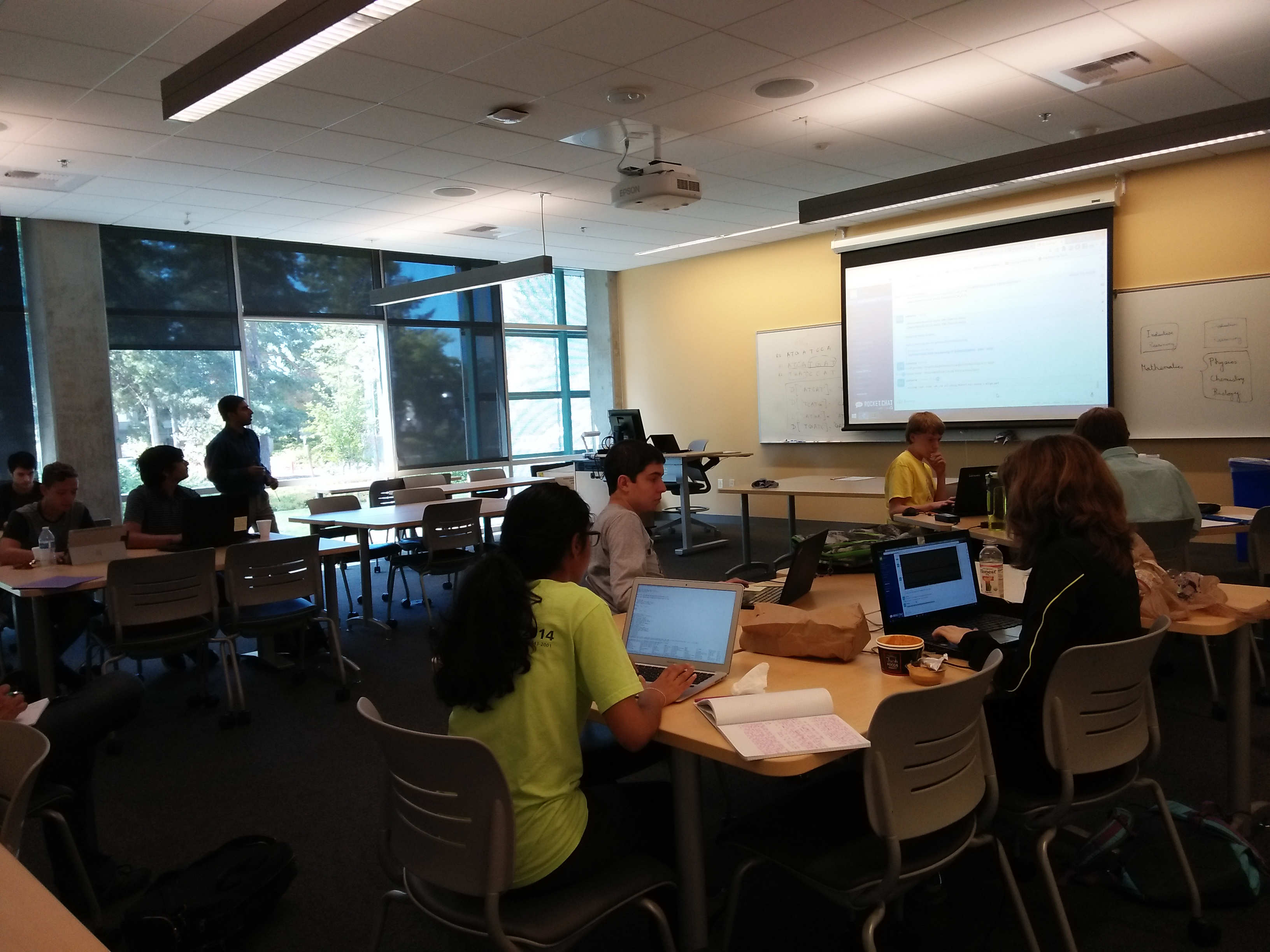
This summer, we are offering live online modules via Zoom and chat-based sessions and in-person modules at the Bellevue College. We are making a small change in the online modules. The introductory course is now split into Introductory (for students with no coding background) and Intermediate (for those with prior experience), while the former Intermediate module is now Advanced.
Due to strong demand, our AI and Machine Learning module is returning this year. We are also introducing a new Pre-research module for students interested in science-fair–style projects, where participants can plan their projects over summer and submit proposals in fall.
We are again offering the two lab modules, Learning Chemistry from Enzymes, covering the concepts of chemistry based on biochemical molecules and Microbial Mysteries on biotechnology. These lab classes will be held at the Bellevue college.
Also we are offering a biotechnology lab module for middle-schoolers during the mid-winter break (Feb 17-20).
2025
During the 2025 summer, we offered a module on AI and Machine Learning using Python for the first time. This topic was the top suggestion of the feedback form from prior years. We again offered the two lab modules, Learning Chemistry from Enzymes, covering the concepts of chemistry based on biochemical molecules and Microbial Mysteries on biotechnology held at the Bellevue college. For coding topics, both in-person classes at Bellevue College and online classes thorugh zoom were offered.
Coding Gene.us Challenge: In fall 2025, we announced the 2025-26 Coding Gene.us Challenge. The members of Coding for Medicine clubs around the country and other young scientists excited about computational biology are participating in it.
Science Fair Top Award and Papers:Defne Dingiloglu from Tesla STEM High School looked for antibiotic and antitumor secondary metabolites in the bacteria Streptomyces scabiei under the guidance of Dr. Samanta and received the first place in computational biology category at Washington State Science and Engineering Fair (WSSEF). You can see her report here.
Research efforts expanded to bacterial genomes using PGR-TK, and several students began exploring genome-scale AI models, including Stanford’s Evo model.
2024
In 2024, we created a yearlong problem solving module. Students can join this self-paced module any time. Each of them gets one question at the beginning of the month and then the solution at the end of the month.
There were no major change in the summer program between 2023 and 2024. On the research front, our initial foray into using pangenome research toolkit was productive as reported here, and we decided to look into all plants.
2023
By 2023, we returned to in-person instruction while maintaining online offerings for students nationwide. We introduced a new lab module, Learning Chemistry with Enzymes, and launched a formal research group. That fall, students began working with pangenome research toolkit (PGR-TK) applying it to plant genomes.
2022
2022 was another year of online instructions. Bellevue College location was still closed, and therefore we had a lab session at the Redmond STEM center.
2021
In 2021, we continued online instructions and could hold one lab session at Redmond Ridge Community Center. In this year, more schools started student-led Coding for Medicine clubs.
2020
The COVID-19 pandemic in 2020 forced us to pause in-person activities, including lab work, and transition fully online. Despite the disruption, students from across USA joined our virtual programs
After the summer of 2020, Leo Zou and Athulya Saravanakumar from the Dulles High School, Houston, TX launched the first student-led Coding for Medicine club for their school to introduce their fellow students to biology-inspired coding. This club had been a great success and inspired other high-schoolers from around the country to start school-based chapters.
Anne Gvozdjak, our student from 2017, conducted excellent research for two years under the supervision of Dr. Samanta and reported the findings in this paper. Anne later joined MIT in the fall of 2021.
2019
2019 was an active year. By late 2018 and into 2019, student researchers joined ongoing projects as Salmonberry research. They collected samples, extracted RNA and sent it for sequencing. While the yield with the first sequencing attempt was poor, a second round in late 2019 produced high-quality data.
A separate computational research project was started by Anne Gvozdjak, a talented high-schooler from Bellevue HS, under the supervision of Dr. Samanta.
In addition to our existing summer module, we introduced Microbial Mysteries lab to explore the microbial world, and a middle-school program, Coding with Pokémon to teach R to middle-schoolers. We continued in Fall 2019 with another online module, Precalculus with Coding and Animation, for advanced middle-schoolers and high-schoolers.
2018
In 2018, we launched the salmonberry genomics project, originally conceived by students from the 2017 advanced class, and announced its crowdfunding campaign.
Also this summer our first lab module, Tinkering with DNA, alongside introductory, intermediate, advanced, and R programming classes.
We also ran our Calculus Meets Coding module through winter and taught calculus to a group of advanced middle-schoolers and high-schoolers.
In late 2018, we initiated online classes on R and bioinformatics for college students and post-doctoral researchers.
2017
In 2017 summer, we launched our first Texas session, while also expanding in the Seattle area with multiple introductory and advanced modules, including a dedicated program at the Mercer Island high school.
During the fall, we started discussions with the students from our advanced module regarding a crowdfunding project.
2016
This summer the enrollment had grown to 24 students, and we held two modules.
2015
Coding for Medicine began humbly with seven students. The summer classes were held at the Bellevue College.
